




GMC Acadia vs Chevy Traverse: Which GM Three-Row SUV Should You Buy?
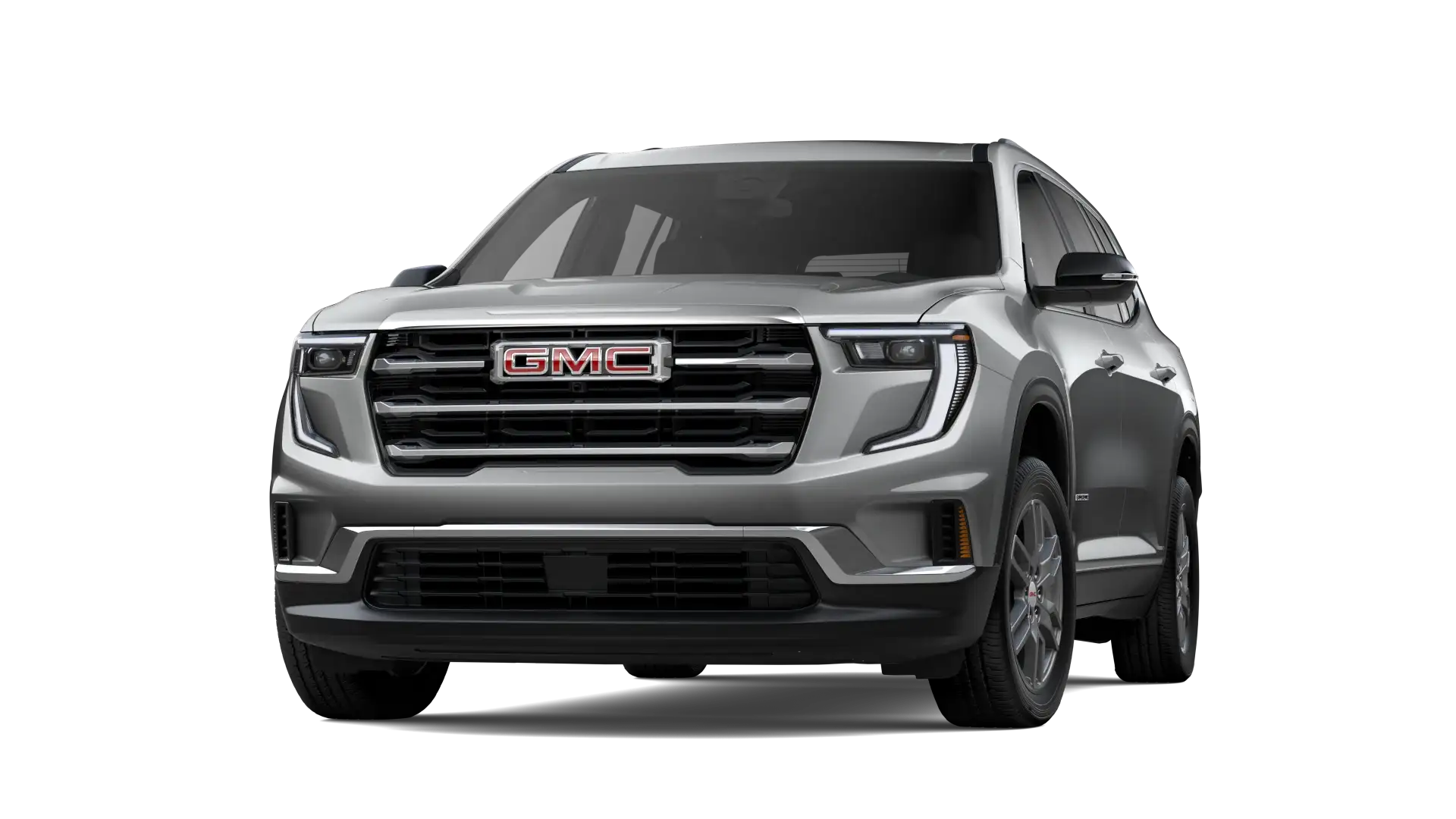
The GMC Acadia and the Chevrolet Traverse are, at their core, the same vehicle. They share the same GM C1YY platform, the same wheelbase, the same engine options, and the same fundamental capability profile. If you know this going in, the question becomes not which one is technically superior, but which one delivers the right combination of content, style, and price for what you actually need.
This comparison lays out the honest differences between the 2026 Acadia and the 2026 Traverse, including where the Acadia earns its premium and where the Traverse is genuinely the smarter buy. The goal is to give you the information that helps you decide, not to steer you toward the more expensive option.
Quick Answer: Which One Wins for Most Buyers
For most buyers, the Traverse is the stronger value. It starts at approximately $39,000 and delivers the same powertrain, towing capacity, interior volume, and seating capacity as the Acadia at a lower base price. If you need a three-row GM SUV and you are not specifically drawn to the Acadia’s premium interior execution or the Denali trim’s technology and materials, the Traverse gives you everything that matters at a lower cost.
The Acadia earns its higher price, which starts at approximately $43,700, for specific buyers: those who want the Denali trim’s interior materials and technology, those who respond to the Acadia’s more restrained exterior styling versus the Traverse’s bolder design, and those for whom Super Cruise availability in the GMC lineup is part of the decision. For those buyers, the Acadia’s premium is justified. For everyone else, the Traverse delivers the same core product more affordably.
Same Platform, Different Personalities: What the Acadia and Traverse Actually Share
Both vehicles are built on GM’s C1YY front-wheel-drive-based platform, which supports optional all-wheel drive on both. The wheelbase is identical. Both offer the same 2.5-liter turbocharged four-cylinder engine producing 328 horsepower and 326 lb-ft of torque, mated to an eight-speed automatic transmission. Both have the same maximum towing capacity of 5,000 pounds when properly equipped. Both support three-row seating.
This shared foundation is not a marketing convenience. It means the fundamental driving experience, the ride quality, the handling balance, the powertrain response, and the safety architecture are the same between the two vehicles. If you drive both back to back, the differences you notice are in the interior execution, the exterior design, and the technology layer, not in how the vehicle moves.
Interior Comparison: Where Your Extra Money Goes
This is the area where the two vehicles diverge most clearly. The Traverse interior is well-executed and content-appropriate at each trim level, but it follows Chevrolet’s design language, which emphasizes practicality and user-friendliness over premium cues. Materials at the entry and mid levels are durable and functional. At the High Country trim, the Traverse interior becomes genuinely premium with available leather and upscale trim materials.
The Acadia interior, particularly at the Denali level, reflects a different philosophy. Stitched surfaces appear in areas the Traverse treats as hard plastic, the instrument panel architecture is more architecturally distinctive, and the overall material quality at equivalent price points is a step above the Traverse. The Acadia Denali’s interior competes with vehicles that cost substantially more, and buyers who spend significant time in their vehicle and care about the tactile and visual quality of the cabin will notice the difference.
Rear-seat passengers in both vehicles get comparable legroom and headroom in the second row. Third-row access and comfort are similar, with neither vehicle distinguishing itself dramatically from the other in that specific dimension. Both provide reasonable third-row space for children and occasional adult use, but neither is a first-choice long-distance seat for adults.
Engine, Performance & Fuel Economy
Both the Acadia and the Traverse are available with a single powertrain for 2026: the 2.5-liter TurboMax four-cylinder producing 328 horsepower. This engine is the same unit across both vehicles, calibrated identically. Fuel economy ratings are nearly identical. The Acadia is EPA-rated at 20 city and 26 highway in front-wheel drive, and 20 city and 23 highway with all-wheel drive.
The driving experience between the two is comparable, with the suspension tuning varying slightly. The Acadia is generally tuned a bit more toward composed ride quality, while the Traverse’s larger size and slightly different suspension geometry give it a different character on longer highway drives. Neither vehicle is a dynamic outlier in either direction. Both prioritize comfort and composure over any sporting intent.
All-wheel drive is available on both vehicles and recommended for buyers who regularly drive in rain or who want added confidence on Florida’s occasionally flooded roads. AWD adds minimal fuel economy penalty on these platforms and provides meaningful traction improvement in wet conditions.
Third Row, Cargo & Towing Capability
On paper the two are the same size, and in practice they are too. The Traverse is half an inch longer overall at 204.5 inches against the Acadia’s 204.0. Behind the third row the Acadia actually holds slightly more, 23.0 cubic feet to the Traverse’s 22.9. Fold everything flat and the Traverse edges ahead at 97.6 cubic feet versus 97.5. Those gaps are a tenth of a cubic foot in each direction, which is to say there is no gap at all.
Seating works out the same way. Both come with second-row captain’s chairs for seven, and both offer a second-row bench that takes them to eight, on the Traverse LT and on the Acadia Elevation. If you need the eighth seat, either vehicle gets you there.
Towing capacity is identical at 5,000 pounds for both when properly equipped with the available trailering package. That covers a mid-size boat, a utility trailer or a light camper. Neither is a true heavy tower, and buyers who need more than 5,000 pounds should look at the GMC Yukon or Sierra.
Technology, Safety & Super Cruise Availability
Both vehicles come with GM’s active safety suite as standard equipment across all trims, including automatic emergency braking, lane keep assist, blind spot monitoring, rear cross-traffic alert, and forward collision warning. The tech content across equivalent trim levels is largely parallel.
The meaningful technology distinction is Super Cruise, GMC’s hands-free highway driving system. Super Cruise is available on the 2026 GMC Acadia and is standard on the Acadia Denali. It is not available on any trim of the 2026 Chevrolet Traverse. For buyers who regularly drive Florida’s interstates and highways and are specifically interested in hands-free driving assistance, this difference is significant and points definitively to the Acadia.
Both vehicles support wireless Apple CarPlay and Android Auto, GM’s connected services suite, and available Wi-Fi hotspot connectivity. Infotainment screen sizes and interface quality are comparable at equivalent price points.
Price Gap: Is the Acadia Worth the Extra $3,000-$5,000?
The Acadia’s price premium over a comparably equipped Traverse ranges from approximately $3,000 to $5,000 depending on trim level. At the entry level, this difference is harder to justify because the interior execution gap between entry Acadia and entry Traverse trims is narrower than at higher levels.
At the Denali level, the Acadia earns its premium more clearly. The Denali’s interior materials, standard Super Cruise, and premium content differentiation represent genuine additional value for buyers who want those specific things. If you are cross-shopping a Traverse High Country against an Acadia Denali and you drive both, the interior and technology difference is noticeable, and many buyers who make that comparison understand why the Acadia costs more.
At mid-tier trim comparisons, the Traverse is typically the stronger value proposition for buyers who are primarily motivated by practical capability, seating, and cargo at a lower price.
Which One Should You Choose? (Buyer Profiles)
Buy the Acadia If…
You want Super Cruise for regular Florida highway driving. You are drawn to the Denali trim’s interior quality and are willing to pay for it. You prefer the Acadia’s more restrained exterior styling. You are cross-shopping with BMW, Audi, or Lincoln in the premium three-row space and want to stay in the GM ecosystem.
Buy the Traverse If…
You want maximum value from a three-row GM SUV. You would rather put the difference in price toward options, or keep it. You are not specifically interested in Super Cruise. You prefer the Traverse’s higher-style exterior design. You are buying at the entry or mid-tier level and want to keep the total cost lower.
Resale Value and Long-Term Ownership Cost
Both the Acadia and Traverse depreciate at rates consistent with their segment, though the Acadia Denali tends to hold its value better at the upper end of the trim range due to its premium positioning. Mid-tier trim comparisons between the two vehicles show similar depreciation curves over a three to five year ownership horizon.
Where the Acadia has a potential long-term advantage is the Denali trim’s equipment density. A well-equipped Acadia Denali with Super Cruise often commands a stronger private-party and trade-in value than a comparably aged Traverse High Country because the specific technology differentiation, particularly Super Cruise, is not available in the Traverse line at any price. Buyers in the used market who specifically want hands-free driver assistance in a GM three-row SUV have only the Acadia as an option, which sustains demand and supports residuals at that trim level.
For buyers financing either vehicle, the monthly payment difference between a comparably equipped Acadia and Traverse typically runs $50 to $90 per month over a 60-month term, which over the ownership period amounts to $3,000 to $5,400. Whether that differential is justified depends entirely on which vehicle’s specific advantages matter to you.
Compare the Acadia In Person at Starling Buick GMC Stuart
The GMC Acadia is available at Starling Buick GMC Stuart. If you decide the Traverse is the better fit for how you drive, we would rather tell you that honestly than sell you the wrong vehicle, and we can point you to the nearest Chevrolet store. If you are cross-shopping these two vehicles, we recommend doing exactly that: driving both. The differences between them become immediately clear in person, and the right choice for your specific situation will likely be apparent after fifteen minutes in each cabin.
Our team at Starling Buick GMC Stuart can walk you through current Acadia inventory, trim availability, and the specific equipment packages that affect the Acadia’s price relative to the Traverse. We serve buyers throughout Martin County, Stuart, Palm City, Jensen Beach, Hobe Sound, and Port St. Lucie. Come in, ask the questions, and leave with a clear answer.
Conclusion
The GMC Acadia and Chevrolet Traverse are the same vehicle at the foundation and different vehicles in execution. The Traverse wins on value for the buyer who wants a practical, well-built three-row SUV at the lowest price in the GM lineup. The Acadia wins on interior quality and technology for the buyer who specifically wants Denali-level materials or Super Cruise. The honest answer about which to buy depends on which of those things matters to you, and both are strong choices once you are clear on your priorities. Come see them side by side at Starling Buick GMC Stuart and make the decision with both in front of you.
Frequently Asked Questions
Are the Acadia and Traverse the same vehicle?
They share the same GM C1YY platform, the same wheelbase, the same powertrain, and the same fundamental capability. The differences are in interior design and materials, exterior styling, technology content (notably Super Cruise availability only on the Acadia), and price positioning. Mechanically they are the same vehicle. As products they are aimed at different buyer preferences within the same segment.
Does the Acadia have anything the Traverse doesn’t?
Yes. The most significant exclusive is Super Cruise, GMC’s hands-free highway driving system, which is available on the Acadia and not available on any Traverse trim. The Acadia Denali also offers a more premium interior execution than any Traverse trim at comparable pricing. The GMC AT4 off-road trim is exclusive to the Acadia within this comparison.
Is the Acadia more reliable than the Traverse?
Both vehicles share the same mechanical foundation, so reliability differences between them are more likely to reflect trim-level complexity than fundamental engineering differences. GM’s longer-term reliability data for both vehicles draws from the same platform. At this point in the current generation’s production, both are early enough that long-term comparative data is limited.
Which holds its value better, the Acadia or Traverse?
Historically, the Acadia has held its value slightly better than the Traverse at comparable trim levels, partially because the Acadia positions itself in a slightly more premium segment. Denali trim Acadias in particular tend to retain value well. However, both vehicles are subject to the same market conditions affecting GM’s three-row SUV segment, and individual factors like mileage, condition, color, and local demand have more impact on resale value than the brand distinction between the two.
0 comment(s) so far on GMC Acadia vs Chevy Traverse: Which GM Three-Row SUV Should You Buy?