






Fall Vehicle Prep Checklist for Snowbirds Arriving in Stuart
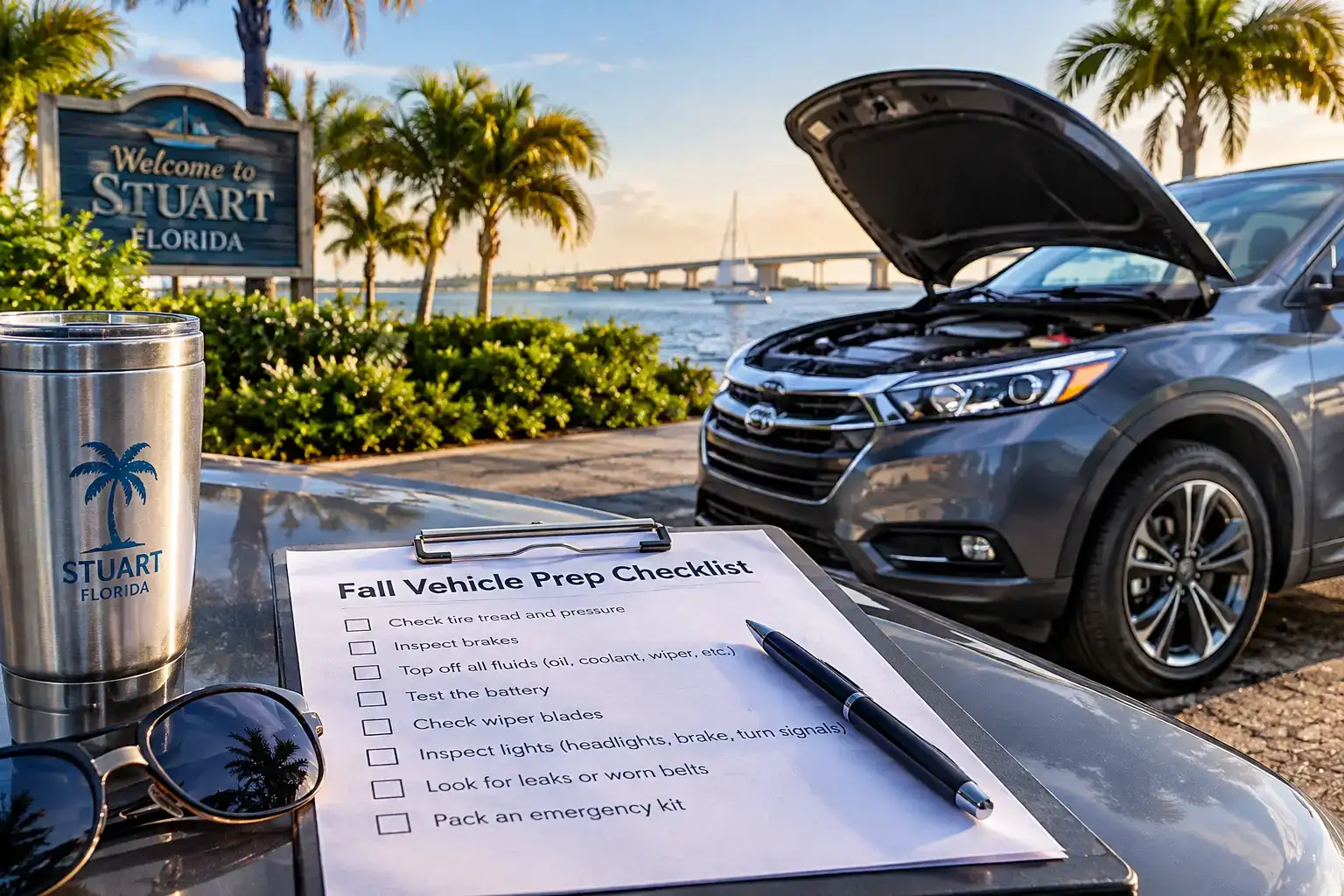
Every year, hundreds of thousands of seasonal residents make the drive south from the Northeast, Midwest, and Mid-Atlantic into Florida, and Stuart welcomes a significant share of that annual migration. If you have just completed that 1,000-plus-mile drive, or you are preparing to make it in the next few weeks, your vehicle needs attention before you settle into Stuart’s slower pace.
The transition from northern driving conditions to Florida’s year-round heat, afternoon thunderstorms, and humidity is harder on vehicles than most owners realize. Components that performed reliably in cooler weather can fail quickly in sustained Florida heat, and the road salt and grime accumulated over a northern winter does not stop causing damage just because you crossed the state line. This checklist covers what to inspect, what commonly fails, and what to do about it when you arrive at Starling Buick GMC Stuart.
Why Your Vehicle Needs Attention After a 1,000+ Mile Drive South
A long highway drive is not as easy on a vehicle as it might seem. Sustained highway speeds for 12 to 16 hours heat up brakes, transmission fluid, coolant systems, and tires in ways that normal stop-and-go driving does not. Brake pads that are close to wear limits often reveal themselves after a hard highway drive. Transmission fluid that has been sitting since last season may have degraded. And tires that looked fine in Ohio in April may be showing their age after sitting for six months and then running at highway speed through Georgia heat.
Add to that the climate change your vehicle is about to live through permanently. If you arrived from a climate in the 50s and 60s, your vehicle now lives in the upper 70s through the winter and climbs into the high 80s by April and May, with humidity year-round. That is milder than July in Stuart, but it is still a permanent step up from the northern winter your vehicle is built around, and the back half of your season is genuinely hot. Everything from your battery to your cabin air filter to your AC system will face conditions they were not exposed to during the summer months up north.
Battery, Alternator & Electrical: The #1 Thing Snowbirds Overlook
Florida heat is one of the harshest environments for automotive batteries in North America. Most car batteries are designed for a 4 to 5 year service life under normal conditions, but sustained heat dramatically shortens that timeline. Heat causes battery fluid to evaporate faster, accelerates the internal chemical reaction that leads to plate corrosion, and degrades battery performance at a rate that cold climates simply do not. A battery that started every morning in New England without complaint can fail within weeks of sustained Florida heat exposure if it was already close to end of life.
The specific risk for snowbirds is that your battery sat unused, or lightly used, for the 6 to 8 months you were away. A battery that sits discharged or at low charge for an extended period undergoes a process called sulfation, where lead sulfate crystals form on the battery plates and permanently reduce its capacity. You may have noticed your battery took longer to turn the engine over when you started the car before the drive south, or you may have had no warning at all.
Before the Florida heat compounds any existing weakness, have your battery tested. The test is quick, usually takes less than five minutes, and tells you the battery’s current state of health and cold-cranking amp output. If the test shows you are under 70 percent capacity, replace the battery now rather than waiting for a no-start event in a Publix parking lot in March. While the battery is being checked, ask about the alternator output as well, as a failing alternator can drain a new battery and cause similar symptoms.
Tires, Pressure & Alignment After the Long Drive
Tire pressure changes approximately one PSI for every 10 degrees Fahrenheit change in ambient temperature. If you drove south from an area where outdoor temperatures were in the 40s or 50s, your tires are now running in 80-plus degree air, which means they are likely overinflated by 4 to 6 PSI compared to what they were when you set them up north. Overinflated tires wear faster in the center of the tread, handle less predictably on wet roads, and are more susceptible to damage from road debris.
Check and adjust all four tires to the recommended PSI listed on the sticker inside your driver’s side door jamb, not the maximum pressure listed on the tire sidewall. The door jamb number is the manufacturer’s recommendation for your vehicle’s weight and handling characteristics; the sidewall number is the maximum the tire structure can hold, which is not the correct operating pressure. This check takes two minutes with a gauge and is one of the highest-value things you can do for tire longevity after the drive south.
Beyond pressure, inspect your tires visually for cracking in the sidewall, which is common in tires that have been sitting without UV protection exposure. Florida’s sun is significantly more intense than most northern climates, and sidewall cracking accelerates in UV-heavy environments. If your tires are showing cracking or are more than five to six years old regardless of tread depth, a tire evaluation is worth adding to your arrival service visit.
AC System: Why It Fails After Sitting Unused All Winter
Your air conditioning system is not a set-it-and-forget-it component. The system uses refrigerant under pressure, and that pressure is maintained by rubber O-rings, seals, and hoses throughout the system. When a vehicle sits unused or in low-AC-demand environments for six or more months, these seals can dry out and allow small amounts of refrigerant to escape. You may not notice this up north if you rarely needed the AC, but you will notice it on the drive down or within the first hot week in Stuart.
Signs of low refrigerant include AC that cools initially but then loses effectiveness, AC that takes longer than expected to cool the cabin from ambient temperature, and a system that blows cool but not cold air. If your AC is not performing the way it should within the first few days in Florida, have the system checked. A recharge and leak inspection are routine and inexpensive compared to the cost of a compressor failure, which is what happens when a low-refrigerant system runs under load for an extended period.
Even if your AC seems to be working, running the defroster at full blast for five minutes before you leave for the season and when you return is a good practice. It lubricates the compressor seals and helps prevent the drying that leads to leaks. This tip applies whether you are arriving for the season now or preparing to leave in the spring.
Undercarriage: Washing Off Northern Road Salt (Even in Florida)
If your vehicle spent last winter on salted northern roads, the undercarriage carries accumulated salt and brine whether or not you can see it. Washing it off in spring does not fully clear what is packed into seams, wheel wells and frame cavities. Salt is corrosive and continues to attack metal even after the salted roads are behind you. The undercarriage of your vehicle, including the frame rails, brake lines, fuel lines, subframe components, and exhaust system, can sustain significant rust damage from salt exposure over months and years.
A high-pressure undercarriage wash removes the accumulated salt and brine before it has time to cause additional corrosion in Florida’s humid environment. This is one of the simplest and most cost-effective protective steps a snowbird can take upon arriving in Florida. Ask about it during your service visit, or visit a touchless car wash that includes undercarriage spraying as part of the wash package. Pay particular attention to wheel wells, brake caliper areas, and any areas where mud or debris has accumulated, as these trap moisture against metal surfaces and accelerate corrosion.
Florida’s coastal humidity is also corrosive in a different way than road salt. Salt air from the ocean and intercoastal areas can affect exposed metal on and under the vehicle over time. If your parking situation in Stuart exposes your vehicle to significant salt air, periodic undercarriage inspections and rustproofing treatments are worth discussing with your service advisor.
Wipers, Cabin Filter & Visibility for Florida Afternoon Storms
Martin County receives significant rainfall, and afternoon thunderstorms from May through October can drop an inch or more of rain in under an hour. If your wiper blades are not performing, Florida summer storms are an unpleasant time to discover it. Wiper blades have a typical service life of six to twelve months, and blades that sat unused on a vehicle parked in a northern garage for six months often develop hardening and cracking that causes streaking and poor wet weather performance.
Replace wiper blades if they show any streaking, chattering, or skipping on the windshield. This is a five-minute job and a low-cost component with a high visibility impact. Florida’s UV intensity also degrades wiper rubber faster than northern climates, so plan on replacing blades more frequently here than you may have been accustomed to.
Your cabin air filter is also worth checking during your arrival service. The cabin air filter cleans the air entering your HVAC system, filtering out pollen, dust, mold spores, and debris. A clogged cabin filter reduces HVAC airflow, which reduces AC performance, and in Florida’s high-pollen, high-humidity environment, a fresh filter makes a measurable difference in interior air quality. Check your owner’s manual for the recommended replacement interval; in Florida conditions, annual replacement is a good baseline.
Book Your Snowbird Arrival Inspection at Starling Buick GMC Stuart
Our service team at Starling Buick GMC Stuart is experienced with the specific maintenance needs of vehicles arriving from northern climates. We offer arrival inspection services that cover the key components most likely to need attention after a season away: battery health, tire condition, AC system function, brake inspection, fluid condition review, and cabin filter.
We serve Buick and GMC owners throughout Martin County, Stuart, Palm City, Hobe Sound, Port St. Lucie, and the surrounding Treasure Coast. Scheduling your arrival inspection early in the season means you are not competing for a bay in January, when every snowbird in Martin County has settled in and our service schedule is at its tightest. Call our service team or book online, and we will take care of everything before snowbird season hits full stride.
Conclusion
The drive south is the easy part. Keeping your vehicle performing well through a Florida season requires a few hours of proactive attention at the start. Battery health, tire pressure calibration, AC system function, and undercarriage salt removal are the four highest-priority items for a recently arrived snowbird vehicle. Add wiper blades and a cabin filter and you have covered the checklist that separates vehicles that run trouble-free all season from those that leave owners waiting on a tow in the middle of the season. Our team at Starling Buick GMC Stuart is ready to handle the arrival inspection and get you back on the road, without the worry, for the season ahead.
Frequently Asked Questions
Should I get my car inspected right after driving to Florida?
Yes, ideally within the first week of arriving. A post-trip inspection after a 1,000-plus-mile drive identifies any components that may have been stressed during the trip: brakes, tires, fluids, and belts. Getting it done early also lets you address battery and AC concerns before April and May, when Florida’s temperatures climb and a marginal battery or a low-refrigerant AC system finally gives out.
Does Florida heat really affect car batteries that much?
Yes, significantly. Heat accelerates the chemical degradation inside a battery at a faster rate than cold temperatures do. Most automotive experts note that while cold climates make it harder for a battery to deliver current, heat is what actually kills batteries over time by evaporating battery fluid and causing plate corrosion. A battery that functions in a northern climate may fail within one or two Florida summers if it is already past its prime.
Do I need to change my tires or just rotate them?
It depends on their age and condition. A rotation and inflation adjustment are appropriate for tires that are in good condition. If your tires are more than five to six years old, showing sidewall cracking, or have uneven wear patterns, a replacement evaluation is warranted regardless of remaining tread depth. Florida’s road conditions and UV exposure are particularly hard on older tire rubber.
How often should snowbirds service their vehicle in Florida?
Follow your owner’s manual service intervals based on mileage and time. If your vehicle sat unused for six months or more, it may be due for an oil change based on time even if the mileage has not accumulated, particularly if you use conventional oil. Synthetic oil is more tolerant of extended storage intervals. When in doubt, a service visit at the start and end of your Florida season is a reasonable baseline.
0 comment(s) so far on Fall Vehicle Prep Checklist for Snowbirds Arriving in Stuart