





What to Do If Your GMC or Buick Was Damaged in a Florida Hurricane
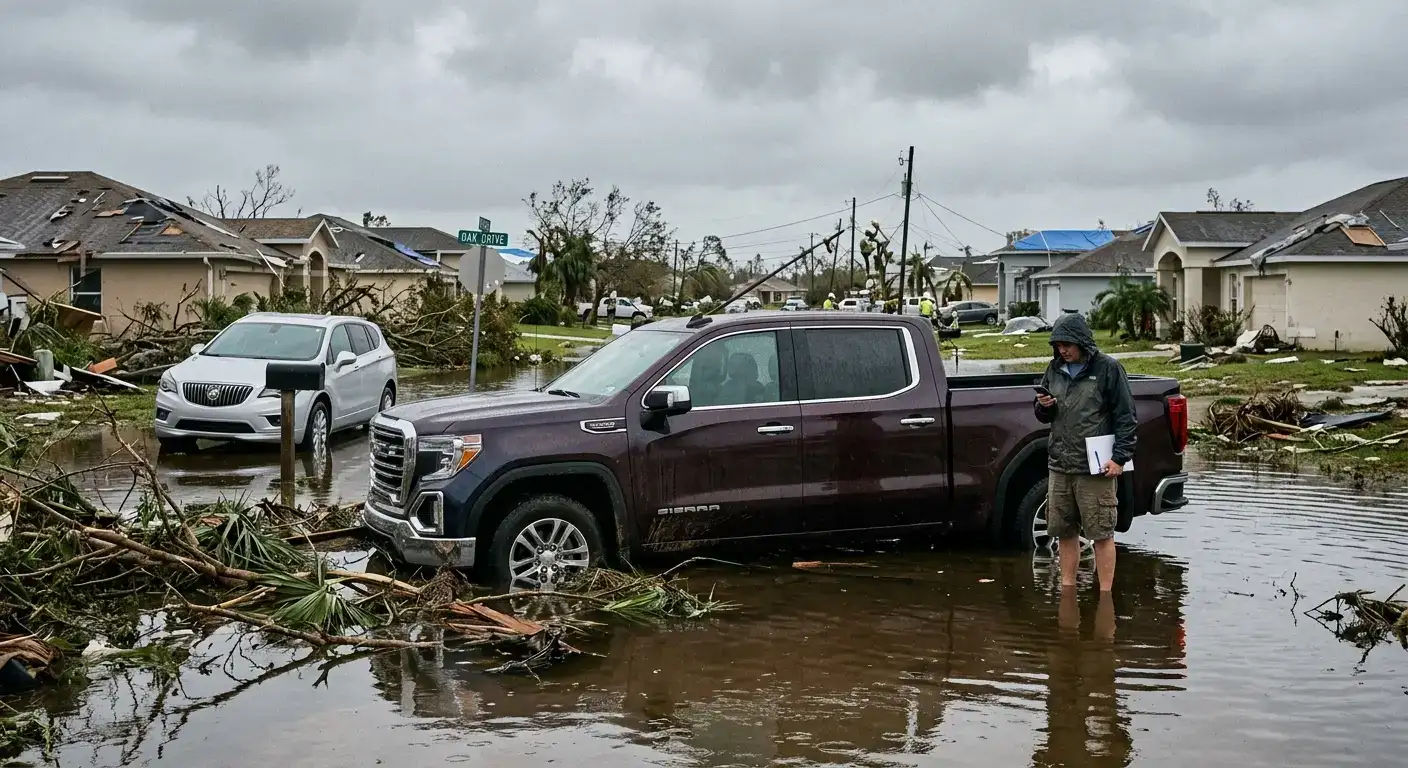
One rule matters more than everything else on this page. If flood water reached the floor of your vehicle, do not start it. Not the key. Not the push button. Not “just to see.” An engine that was flooded but never started can usually be saved. An engine that was flooded and then started usually cannot.
September is the peak of Florida’s hurricane season, and the Treasure Coast sits in the zone where the gap between the forecast and the reality can be very small. If your GMC or Buick took damage, what you do in the first 48 hours shapes everything that follows: what your insurance pays, whether the vehicle is safe to restart, and whether you end up with a properly restored truck or one carrying hidden damage for the rest of its life.
This guide walks the whole process in order. What to do, what to avoid, what Florida’s insurance rules actually say, and what our service department at Starling Buick GMC Stuart can do for you. We see this every storm season.
The First 48 Hours: What to Do (and What NOT to Do)
Adjusters document everything. The physical evidence starts changing the moment the storm passes. Most of the expensive mistakes happen in these two days, and most are made by owners trying to help themselves.
Do NOT Attempt to Start a Flood-Damaged Vehicle
Here is why the rule at the top is absolute.
Water does not compress. Air does. When water sits in the combustion chamber and the piston comes up against it, the connecting rod bends or breaks instantly. That is hydrolock, and it means a complete engine replacement. The difference between a flooded engine that was never started and one that was is measured in thousands of dollars.
On GMC and Buick vehicles with push-button start, there is a second trap. The keyless system can wake modules when the fob comes near the vehicle. Keep the fob away from the truck until a technician has evaluated the electrical system.
Document Everything Before Touching the Vehicle
Before you move it, open a door, or start any cleanup, photograph everything.
All four sides. The roof. The undercarriage if you can reach it. The interior. The engine bay with the hood up. And the surroundings, because context matters: downed trees, debris fields, water lines on nearby walls and fences.
Shoot video as well as stills. Video captures continuous context instead of selected angles, and adjusters read it that way. Say the date and time out loud while recording. Your phone stamps the metadata automatically, but a verbal confirmation is a second layer some adjusters specifically look for.
Photograph the vehicle where it sits, before anyone moves it. If it is partly submerged, get the water line on the exterior before the water drops. That single mark is often the most important data point in the entire flood claim.
Identify the Damage Before You Call
Four questions sort almost every hurricane claim. Answer them before you dial.
- Did anything fall on it or hit it? That is wind damage: trees, debris, hail.
- Did water get inside? That is flood damage, at any depth.
- Was the water salty? Storm surge is its own category, and a more serious one. Salt attacks metal and electronics differently than fresh water does.
- Was it more than one of the above? Report all of it.
Salt water is the Treasure Coast question that inland markets never have to ask. If surge reached your vehicle, say so explicitly when you report the claim and again when a technician inspects it.
Calling Your Insurance Company: What to Say and What to Expect
Most Florida insurers open a dedicated catastrophe claim line during a declared disaster. Ask for it by name. The standard claims line runs far slower during peak storm response.
Have four things in front of you: policy number, VIN, the vehicle’s current location, and your photos.
Be specific about the damage. “My car was flooded” and “a branch hit my car” are different claims with different processes and, at most carriers, different adjusters. If both happened, report both. Do not soften the description either. Insurers reduce payments when the reported damage understates what the photographs show.
Rental Coverage and Transportation During the Claim
Most comprehensive policies include rental reimbursement. Confirm it on the same call and ask for two numbers: the daily limit and the total coverage period. That is your transportation budget for the repair.
Then reserve the car immediately. On the Treasure Coast, rental availability collapses within 24 to 48 hours of a major storm as the full damage picture emerges. Wait two days and there may be nothing left in Martin County.
Flood Damage vs Wind Damage: Key Differences for Your Claim
Both fall under comprehensive coverage, and both carry the same deductible. What differs is the inspection, the repair path, and how long it takes. Knowing which you have tells you what to expect.
What Counts as Flood Damage on Your GMC or Buick
Flood damage means water entering the vehicle from outside: storm surge, rising water, or standing rainwater. Water that comes in through a window a branch broke is wind damage that let water in, which is a different repair conversation even though the coverage is the same.
In a modern GMC or Buick, flood water can reach the engine and transmission through the air intake or dipstick tube. It can reach the electrical system and every module connected to it once it clears the floor. It soaks upholstery, carpet, and headliner. It gets into the audio and infotainment components, and into the sensors and cameras mounted low in the body.
That last part is what owners underestimate. A Sierra 1500’s electrical architecture runs to dozens of modules and hundreds of sensors. Water damage to them often shows nothing at first, then surfaces as electrical failures weeks or months later. This is why a post-flood inspection by a certified GMC or Buick technician matters even when the vehicle dries out and drives normally.
Saltwater Damage: A Separate and More Serious Category
The Indian River Lagoon and the Atlantic put salt water into places that never see it otherwise. Salt accelerates corrosion in metal. It degrades rubber and plastic seals faster. And it leaves conductive deposits in electrical systems that keep causing shorts long after everything looks dry.
Report salt exposure specifically, to your insurer and to whoever inspects the vehicle. The correct repair involves flushing accessible components with fresh water, inspecting and cleaning the entire electrical system, and assessing every rubber seal and gasket that went under.
A saltwater vehicle that looks fine and was never properly treated can develop systemic failures six to eighteen months after the storm. That timeline is the reason to insist on the full inspection now rather than after the claim closes.
Working With a Certified GMC and Buick Service Center After a Hurricane
The gap between a certified GM service center and an independent shop is always real. After a hurricane in Florida, it is at its widest.
Certified centers have GM’s technical service database, which carries flood and hurricane inspection protocols written for current-generation GM vehicles. They have the equipment to scan every module for water-related fault codes, including codes that trigger no warning light at all. They can order OEM parts to your vehicle’s exact specification and reach GM’s parts priority system during declared disaster periods, when availability is under strain. And the assessment they write carries the weight of a manufacturer-authorized inspection when it lands on an adjuster’s desk.
What Starling Buick GMC Stuart Can Do for You
Our service department at 2445 SE Federal Hwy performs the full post-hurricane assessment a flood or wind-damaged GM vehicle needs:
A complete diagnostic scan of every module, to catch water-related fault codes before symptoms appear. A visual inspection of the engine, transmission, and electrical system for evidence of water intrusion. An assessment of every rubber seal, door gasket, and sunroof drain the storm touched. And a written damage report formatted the way adjusters need it.
If your vehicle was towed somewhere else after the storm, we can coordinate transport to our facility. If your adjuster wants a certified GM technical assessment to support the claim, we can schedule the inspection and produce the documentation.
Contact our service department at 2445 SE Federal Hwy in Stuart to book a post-hurricane inspection.
Florida Insurance Specifics Every Vehicle Owner Should Know
Florida has its own rules, and a few of them surprise people.
Comprehensive Coverage and the Hurricane Claim
Hurricane damage to a vehicle is covered under comprehensive, not collision. That applies to wind, falling debris, flood water, and storm surge alike.
If you carry liability only, hurricane damage to your vehicle is not covered. There is no workaround, and one common piece of advice circulating online is simply wrong: your homeowners or renters policy does not cover your vehicle. It never has, and the garage makes no difference. Homeowners insurance excludes vehicles whether they are in the driveway, in the garage, or anywhere else, and physical damage to a car from wind, flooding, or a fallen tree falls to the comprehensive portion of the auto policy.
There is one narrow exception worth knowing. Your homeowners, renters, or condo policy may cover personal belongings that were inside the vehicle, subject to your contents limits. The laptop in the back seat, yes. The vehicle itself, no.
Comprehensive is not legally required in Florida for a vehicle you own outright, which is why many owners drop it from older cars to trim the premium. Financed and leased vehicles almost always carry it as a condition of the agreement. If you are not sure what you have, your insurance card or policy documents list your coverage types, and your agent can confirm in a two-minute call.
Florida’s Deductibles and the 80 Percent Total Loss Rule
Florida has no hurricane deductible on auto insurance the way it does on homeowners policies. Your standard comprehensive deductible applies, declared disaster or not.
The total loss threshold is 80 percent, and one detail in how it is measured works in your favor. Under Florida Statute 319.30, a vehicle reaches total loss status when repairing it to pre-loss condition costs 80 percent or more of what it would cost to replace it with one of like kind and quality. That is replacement cost, not actual cash value. Most states apply a 75 percent test against ACV, which is a lower bar. If your insurer is running the calculation against ACV, the threshold is being applied incorrectly, and that is worth raising.
Two more things about a total loss. You have the right to negotiate the valuation using comparable vehicles in the Florida market. And you are not obligated to hand the vehicle over: Florida lets you retain the salvage, with the salvage value deducted from your payout, if you would rather keep it.
Our team at Starling Buick GMC Stuart can pull market comparables for GMC and Buick vehicles to support your negotiation when an offer comes in below what the vehicle would actually cost to replace on the Treasure Coast today.
After the Storm: Preventing Future Hurricane Damage
The week after a hurricane is when preparation finally feels urgent. Use it.
Covered parking does more than anything else on this list. A concrete block garage cuts wind debris risk sharply and removes surge risk entirely for anything stored above ground level. No garage? Find one now, not during the next cone of uncertainty. Research parking structures that allow private storage during storm events. Identify friends or family with covered space and put their address in your evacuation plan. Treat where the vehicle goes as a line item in your storm prep, not an afterthought.
On the vehicle itself, check weatherstripping and door seals before each season. Deteriorated seals let wind-driven rain into the interior without any flood-level water involved. Our multi-point pre-season service check includes that inspection.
Frequently Asked Questions
These are the hurricane damage questions our service team hears most.
Can I drive my vehicle after a hurricane if it looks fine?
If no flood water touched it and the damage is cosmetic, driving it is fine pending a full inspection. If there is any chance water got in, even a few inches, have it inspected first. Not sure? Look for water staining on the carpet, a musty smell, or sediment on interior surfaces. Any of the three means water intrusion, and that means a professional evaluation before you drive.
How long does hurricane vehicle damage take to process with insurance?
After a major Treasure Coast storm, adjusters are working through a large volume of claims at once. Expect first contact within 24 to 72 hours of filing. Physical inspection usually takes 3 to 10 days depending on volume. Repair authorization follows within 2 to 5 business days of the assessment.
Start to finish, a straightforward wind claim can close in two weeks. Extensive flood damage requiring parts sourcing can run two months or more. Follow up with your adjuster every three to five business days if you have not heard anything. That is normal practice in Florida after a storm, not pestering.
My vehicle is a total loss. What are my options?
You receive the vehicle’s actual cash value minus your deductible. You can negotiate that figure if comparable vehicles in the Florida market are selling above the insurer’s number, and you should if they are.
You then have a choice. Let the insurer take title, or keep the vehicle and accept a payout reduced by its salvage value. Most owners let it go, but the option is yours.
If you are replacing it, our team can identify options inside your settlement budget, including certified pre-owned GMC and Buick vehicles that come with a known quality baseline and warranty coverage. That matters after a storm season, when the used market gets unpredictable.
Contact Starling Buick GMC Stuart for Post-Hurricane Service
If your GMC or Buick took hurricane damage, our certified service department at 2445 SE Federal Hwy in Stuart handles post-hurricane inspections, insurance documentation, and the full range of storm damage repair. We prioritize Stuart and Treasure Coast customers during recovery periods and can work directly with your adjuster on the technical documentation your claim needs.
Contact us at 2445 SE Federal Hwy in Stuart to schedule your assessment.
Conclusion
Hurricane damage is manageable when the first moves are the right ones.
Photograph everything before you touch the vehicle. Never start a flooded engine. Report the damage accurately and name salt water specifically if it was involved. Get a certified GM technical assessment, because your claim needs it as much as your vehicle does. Know that comprehensive coverage is the only thing standing between a hurricane and your vehicle, and that no homeowners policy will fill that gap. And if the vehicle is totaled, remember the 80 percent test runs against replacement cost, and that the valuation is negotiable.
Starling Buick GMC Stuart’s service department at 2445 SE Federal Hwy is the certified GM resource for post-hurricane assessment, documentation, and restoration on the Treasure Coast.
0 comment(s) so far on What to Do If Your GMC or Buick Was Damaged in a Florida Hurricane