






How Much Does It Really Cost to Own a GMC Sierra 1500? A 5-Year Breakdown
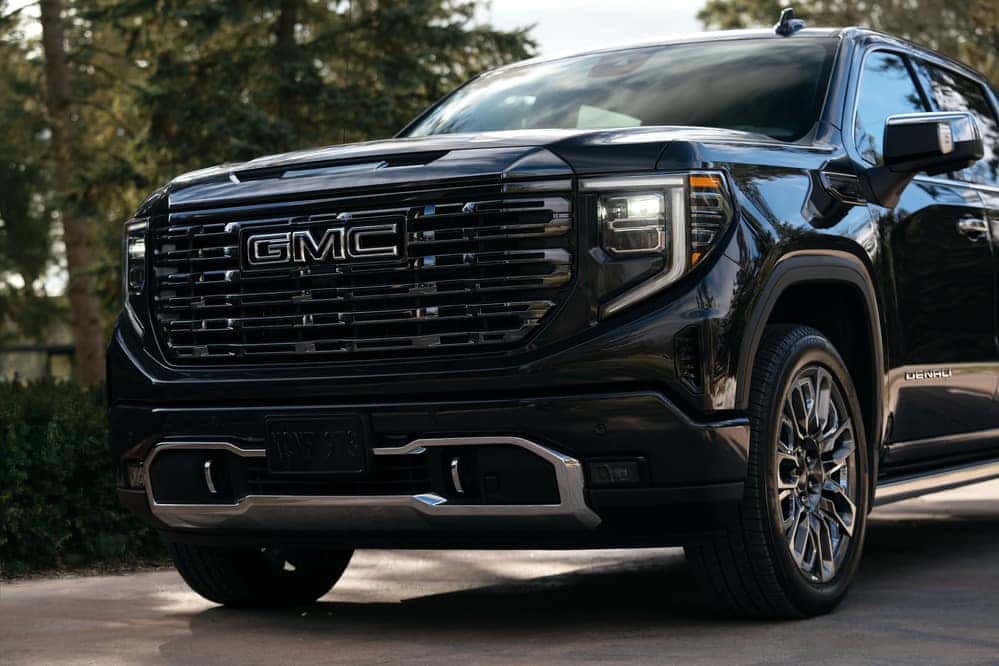
The window sticker is the beginning of the financial story, not the end. A 2026 Sierra SLT Crew Cab 4WD at $58,000 does not cost $58,000 to own, it costs more when you factor in depreciation, insurance, fuel, and maintenance over the years you drive it. What it actually costs, precisely, depends on decisions you make: which engine you choose, how you maintain the truck, and how long you keep it. The good news for Sierra buyers is that trucks are among the best vehicles for total ownership economics in the consumer market, strong resale, competitive maintenance costs, and the Sierra’s Duramax diesel option reduce the five-year cost picture in ways that most buyers do not fully account for when they focus only on the payment.
This guide applies the Edmunds True Cost to Own methodology to three representative Sierra configurations, with Florida-specific data on insurance and fuel prices. Every figure is sourced from Edmunds, EPA fuel economy ratings, manufacturer specification pages, or Florida insurance industry data. These are planning figures, not commitments, actual costs vary with your specific driver profile, location within Florida, driving patterns, and market conditions. Use them to inform your decision, then get specific quotes from our finance team and your insurance carrier before finalizing.
5-Year Cost of Ownership: The Full Picture
Before breaking down each cost category individually, the full five-year picture is worth seeing in one place. The Sierra performs well in total cost of ownership compared to the segment for a specific and demonstrable reason: strong residual value. Trucks hold their value better than almost any other consumer vehicle category, and the Sierra’s residuals are among the best in the half-ton segment. That means the depreciation cost, the largest single line item in any five-year ownership calculation, is lower for the Sierra than for many alternatives at similar purchase prices.
The table below uses the Edmunds TCO methodology applied to three Sierra configurations with Florida-adjusted insurance estimates and current EPA fuel economy calculations. These are ranges, not precise forecasts. The range reflects variation in insurance profiles, driving patterns, and market conditions at resale.
| Cost Category | Sierra Pro (2WD, 2.7L) | Sierra SLT (4WD, 5.3L V8) | Sierra Denali (4WD, 5.3L V8) |
| Starting MSRP (Edmunds) | ~$38,300 | ~$58,000 | ~$69,200 |
| 5-Year Depreciation (est.) | ~$16,000-$18,000 | ~$24,000-$27,000 | ~$28,000-$32,000 |
| 5-Year Insurance (FL, est.) | ~$11,000-$15,000 | ~$13,000-$18,000 | ~$15,000-$20,000 |
| 5-Year Fuel (15K mi/yr, EPA rates) | ~$12,375 (2.7L @ 20 MPG) | ~$14,560 (5.3L @ 17 MPG) | ~$14,560 (5.3L @ 17 MPG) |
| 5-Year Maintenance (est.) | ~$3,500-$4,500 | ~$3,500-$5,000 | ~$3,500-$5,000 |
| 5-Year Repairs (est.) | ~$500-$2,000 | ~$500-$2,500 | ~$500-$2,500 |
| Estimated 5-Year Total | ~$43,375-$51,875 | ~$55,560-$67,060 | ~$61,560-$74,060 |
Depreciation: The Sierra’s Strongest Ownership Argument
Depreciation is the largest cost in any new vehicle purchase, and it is where the Sierra’s ownership economics are most compelling. Residual value projections, the Sierra 1500 typically retains approximately 50 to 55 percent of its original MSRP after five years of average use. For a Sierra SLT at $58,000, a 52 percent residual puts the trade-in or resale value at approximately $30,000 to $32,000, meaning the five-year depreciation cost is approximately $26,000 to $28,000. That is the largest number in the ownership table, and it is worth understanding in full.
The Sierra’s residual value performance is one of the best arguments for buying one. Trucks as a category retain value more effectively than passenger cars, and the Sierra’s combination of brand strength, ProGrade capability, and Denali luxury positioning supports demand in the used market across economic cycles. Buyers who maintain their Sierra well, choose popular color and configuration combinations, and service through certified facilities consistently achieve resale outcomes at the higher end of the residual range.
What Drives Sierra Residual Value and How to Protect It
Color has a measurable effect on Sierra resale. White, black, and silver configurations command stronger used market demand than less conventional colors. The new Glacier White Tricoat for 2026 fits this profile well. Engine choice matters at resale: Duramax diesel-equipped Sierras typically command a premium in the used market because the option is not always available and the fuel economy benefit has durable long-term value. The 6.2L V8 commands a premium on Denali-trim trucks. Trim level, mileage, accident history, and documentation of consistent maintenance all affect resale in predictable and significant ways.
The most impactful thing a Sierra owner can do to protect residual value is maintain the truck through a certified GM service center with a documented service record. A Sierra with a complete, verifiable service history commands a meaningful premium over an otherwise identical truck with gaps. At Starling Buick GMC Stuart, our service department creates and maintains service records that support resale value, that documentation is an asset that accrues over every service visit.
Fuel Costs: The Duramax Diesel Advantage in Numbers
Fuel is where the Sierra’s Duramax diesel delivers its most quantifiable ownership advantage. At 25 MPG combined, the best figure available in any non-hybrid half-ton truck in 2026, the diesel costs approximately $2,070 per year in fuel at 15,000 annual miles and Florida diesel prices of approximately $3.45 per gallon. The Sierra’s 5.3L V8 at 17 MPG combined costs approximately $2,912 per year at 15,000 miles and $3.30 gasoline. The difference is approximately $840 per year, approximately $4,200 over five years.
The Duramax diesel engine typically adds approximately $3,000 to $4,000 to the purchase price over a comparable gas-engine trim. The fuel savings alone offset that premium within the five-year window, meaning the diesel effectively pays for its own upgrade in the fuel savings it generates. For a Treasure Coast buyer who tows a boat, camper, or trailer regularly, towing fuel economy further favors the diesel since diesel engines maintain efficiency under load more effectively than gasoline engines.
Annual and Five-Year Fuel Cost by Engine
The table below illustrates why engine choice is the most consequential ownership cost decision beyond the purchase price itself. At 15,000 annual miles, the gap between the Sierra Duramax diesel and the Sierra 6.2L V8 amounts to approximately $5,120 over five years, real money that stays in your pocket rather than going to the pump. The TurboMax four-cylinder is the most efficient gasoline option in the Sierra lineup and the right choice for buyers who do not regularly tow heavy loads.
All figures use EPA combined MPG ratings for Crew Cab 4WD configurations. Fuel prices used are Florida averages: approximately $3.30 per gallon for regular gasoline and $3.45 per gallon for diesel. These prices change, use current prices for your own calculation when making a final decision.
| Engine | EPA Combined MPG (Crew Cab 4WD) | Annual Fuel Cost (15K mi) | 5-Year Fuel Cost |
| 2.7L TurboMax I4 | 20 MPG (EPA) | ~$2,475 (regular @ $3.30) | ~$12,375 |
| 5.3L V8 | 17 MPG (EPA) | ~$2,912 (regular @ $3.30) | ~$14,560 |
| 6.2L V8 | 16 MPG (EPA) | ~$3,094 (regular @ $3.30) | ~$15,470 |
| 3.0L Duramax Diesel | 25 MPG (EPA) | ~$2,070 (diesel @ $3.45) | ~$10,350 |
Practical Steps to Improve Your Sierra’s Fuel Economy
Tire pressure is the most impactful and most overlooked fuel economy factor in day-to-day truck ownership. Florida’s climate, cool mornings and hot afternoons, can swing tire pressure by four to six PSI over the course of a single day. A Sierra losing 10 PSI across all four tires loses approximately 0.5 MPG combined. Checking monthly and maintaining the manufacturer-specified pressure costs nothing and protects both fuel economy and tire longevity. The Sierra’s TPMS alerts you to significant pressure loss but does not optimize for economy, that task belongs to you.
Cruise control on Florida’s long, flat interstates is one of the most effective and accessible fuel economy strategies available without changing anything about your in-town driving. Consistent speed is significantly more efficient than the gradual acceleration and light braking most drivers apply unconsciously on open highways. Removing unnecessary cargo weight from the bed between uses also matters, a Sierra is a capable truck, not a rolling storage unit, and every 100 lbs of unnecessary weight in the bed has a small but real effect on fuel consumption at 15,000 annual miles.
Insurance Costs in Florida: Planning for the State’s Reality
Florida consistently ranks among the most expensive states in the country for auto insurance. The state’s high rate of uninsured drivers, consistently estimated above 20 percent of registered vehicles, means insured drivers absorb more uninsured motorist coverage cost. Florida’s litigation environment and hurricane exposure add additional cost pressure that buyers relocating from other states often find surprising. For Sierra buyers in the Stuart and Treasure Coast area, building a realistic insurance estimate into ownership cost planning before purchase is essential.
Full coverage auto insurance for a GMC Sierra 1500 in this market typically runs approximately $2,200 to $3,500 annually, depending on the truck’s value (a Denali Ultimate at $84,000 insured costs more than a Pro at $38,000), the driver’s age and record, specific ZIP code within Florida, and coverage levels. These are directional estimates from insurance industry data, your actual quote will be specific to your profile. Budget approximately $185 to $300 per month for Sierra insurance in this area and obtain actual carrier quotes before finalizing your purchase decision.
Why Florida Insurance Costs What It Does
The cost drivers behind Florida’s insurance environment are structural and unlikely to change quickly. The uninsured driver rate, the highest in the country, means every insured driver is effectively subsidizing coverage for the accidents caused by uninsured vehicles. Florida’s assignment-of-benefits environment, which has historically incentivized claims inflation in auto and property insurance, drives carrier losses that translate directly into higher premiums. Hurricane risk in coastal and near-coastal areas including Martin County adds a property damage exposure that inland states do not carry. These are not temporary conditions, they are part of the Florida insurance landscape that Sierra buyers need to account for in their ownership cost planning.
The practical implication is straightforward: get your insurance quote before you finalize a Sierra configuration. The premium difference between insuring a Sierra SLT and a Sierra Denali Ultimate is real and predictable, but the exact number depends on your profile, not on any published average. Do not let insurance be the last cost you discover after everything else is decided.
Reducing Your Sierra’s Insurance Premium
Bundling auto insurance with homeowners or renters insurance through the same carrier typically produces a multi-policy discount of five to fifteen percent. This is consistently available and requires no change in coverage. Increasing your deductible from $500 to $1,000 reduces your premium meaningfully and is financially sensible if you maintain a sufficient emergency fund to cover the higher out-of-pocket cost. Active OnStar service, standard equipment on all Sierra trims, provides stolen vehicle assistance and emergency response features that some carriers credit with a small discount. Ask specifically about OnStar discounts when getting quotes.
Your driving record is the single most impactful individual variable in your insurance premium. One at-fault accident in Florida can increase annual premiums substantially and the effect persists for three to five years. This is both a safety point and a financial one, the cost of an at-fault accident in Florida’s insurance environment extends well beyond the immediate repair situation.
Maintenance Costs: What the Sierra Requires and What It Costs
The Sierra 1500’s scheduled maintenance costs are competitive with full-size truck segment averages and significantly lower than European imports or luxury brand vehicles. GM’s Oil Life Monitor system, standard on all Sierra 1500s, calculates oil change intervals based on actual driving conditions rather than fixed mileage, eliminating the unnecessary every-3,000-mile changes that older advice promotes. Under typical Florida driving, the monitor generally recommends oil changes every 5,000 to 7,500 miles for gasoline engines.
Five-year maintenance cost for a Sierra in normal Florida driving conditions, mixed highway and city use, without consistent severe-duty towing or off-road operation, runs approximately $3,500 to $5,000. This covers oil changes, tire rotations, air filter replacements, and typical brake service. It does not include tire replacement, which adds $800 to $1,400 every 40,000 to 60,000 miles depending on tire specification and driving style.
Scheduled Service Items and Estimated Costs at Starling Buick GMC Stuart
Performing scheduled maintenance at a GM-certified service center like Starling Buick GMC Stuart ensures work is done to GM’s specifications using appropriate fluids and genuine parts. This matters for two reasons: it preserves warranty coverage on related systems, and it creates a verifiable service record that supports resale value. Our technicians are trained specifically on GM vehicles and have access to the diagnostic systems and service information that aftermarket shops may not.
The table below covers primary scheduled maintenance items with estimated costs in the Stuart area. Prices vary, contact our service department for exact current pricing on the specific service you need.
| Service Item | Typical Interval | Estimated Cost (Stuart Area) |
| Oil change (5.3L / 6.2L V8) | 5,000-7,500 miles | $80-$120 |
| Oil change (2.7L TurboMax) | 5,000-7,500 miles | $70-$100 |
| Oil change (Duramax diesel) | ~7,500 miles | $100-$140 |
| Tire rotation | Every oil change / 7,500 mi | $50-$80 |
| Air filter replacement | 20,000-30,000 miles | $40-$70 |
| Brake pads, front axle | 30,000-60,000 miles | $250-$450 |
| Brake pads and rotors, front | 50,000-70,000 miles | $400-$700 |
| Transmission fluid | 45,000 mi severe / 100K normal | $200-$350 |
| Spark plugs (V8 engines) | ~100,000 miles | $250-$400 |
| Coolant flush | 150,000 mi or 5 years | $150-$250 |
What GM’s Factory Warranty Covers
The 2026 Sierra 1500 includes four warranty coverages that meaningfully reduce the financial exposure of early ownership. The bumper-to-bumper basic warranty covers three years or 36,000 miles, defects in materials or workmanship on essentially all vehicle components excluding normal wear items. The powertrain warranty extends to five years or 60,000 miles, covering the engine, transmission, and drivetrain. Roadside assistance is included for five years or 60,000 miles, towing, flat tire assistance, lockout help, and fuel delivery at no charge. The corrosion warranty covers six years or 100,000 miles for structural perforation caused by corrosion.
In Florida’s coastal environment around Stuart and the Treasure Coast, the corrosion warranty is worth understanding. Paint and surface rust are not covered, but structural perforation from interior corrosion is. For trucks that spend time near saltwater, at boat launches, in coastal storage facilities, on bridge approaches, this coverage is relevant. The roadside assistance coverage is available through OnStar and GM’s program for the full five-year period.
Repair Costs: What the Data Shows
Repair costs are the most difficult ownership cost to forecast precisely because they depend on what specific issues arise on your specific truck. The figures below are based on industry repair cost data, RepairPal estimates, and the experience of our service technicians with Sierra trucks across model years. Most Sierra owners in normal use with consistent maintenance will see repair costs at the lower end of these ranges over five years. The upper range reflects trucks with deferred maintenance or specific configuration concerns documented in our reliability guide.
The most financially significant repair risk in the current Sierra generation is the 6.2L V8 connecting rod and bearing concern documented on some 2021-2024 production units. GM has addressed this through extended warranty coverage and TSBs on affected vehicles. Buyers who choose the 5.3L V8 or Duramax diesel avoid this specific concern entirely. For anyone purchasing a 2021-2024 6.2L V8 Sierra, verifying TSB status through our service department before purchase is a required step.
Common Repair Items and Estimated Out-of-Warranty Costs
The table below covers the most commonly documented repair items for Sierra 1500 trucks with estimated out-of-warranty costs in the Stuart area. These figures reflect GM-certified service rates using genuine GM parts. Work performed at certified facilities preserves any applicable warranty coverage on related systems, an important consideration for repairs made while portions of the factory warranty remain active.
The maintenance-versus-repair economics of Sierra ownership are strongly in favor of consistent preventive service. An A/C refrigerant leak costs $150 to $250 to address when identified early during a routine service, it costs $700 to $1,200 when the compressor fails from running low on refrigerant. A transmission fluid change costs $200 to $350, deferred long enough, a transmission shudder can progress to a $3,000-plus repair. The investment in regular maintenance through our service center is the most reliable cost reduction strategy in Sierra ownership.
| Repair Item | Typical Mileage | Estimated Cost (Out of Warranty) |
| A/C condenser replacement | 50,000-100,000 mi | $700-$1,200 |
| Brake pads and rotors (all four) | 50,000-80,000 mi | $600-$1,000 |
| Transmission fluid flush | 45,000 mi (maintenance) | $200-$350 |
| AFM/DFM lifter replacement (5.3L) | Varies | $2,000-$4,500 |
| 6.2L V8 connecting rod / bearing repair | Varies (2021-2024) | $3,500-$6,000+ |
| Battery replacement | 4-6 years | $200-$350 |
| Starter motor replacement | High mileage | $300-$500 |
| Alternator replacement | High mileage | $400-$700 |
Extended Warranty: Is It Worth It for Your Sierra?
Extended warranty coverage is a financial product, and like any financial product, its value depends on your specific situation. For the Sierra 1500, the decision should be driven by the configuration you are purchasing and your intended ownership duration, not by pressure in the finance office. We address this honestly because our goal is your long-term satisfaction with the truck, not a single transaction.
GM Protection Plans, available through Starling Buick GMC Stuart, extend the original warranty terms and maintain GM’s repair standards and genuine parts requirements. The coverage applies to repairs at any GM-certified dealer, which matters if you travel or relocate. Third-party extended warranties vary significantly in coverage quality and claims experience, if you are evaluating a non-GM option, read the exclusions carefully before committing.
When Extended Coverage Makes Sense for the Sierra
Extended coverage makes the most financial sense for the 6.2L V8 given the documented connecting rod and bearing concerns in some 2021-2024 production units. The potential repair cost, $3,500 to $6,000-plus, is large enough that coverage represents meaningful financial protection for that specific engine in those model years. For the Duramax diesel, the more complex emissions system creates potential repair exposure beyond the factory warranty period that makes extended coverage worth considering for buyers who plan to keep the truck past 60,000 miles.
Extended coverage is less financially compelling for the 5.3L V8 in the current generation, which has the cleanest reliability track record of the Sierra’s engine options. For buyers whose ownership period falls entirely within the factory powertrain warranty window, five years or 60,000 miles, extended coverage adds cost without meaningful benefit during that period. Contact our finance team for a direct conversation about whether extended coverage makes sense for your specific configuration and ownership timeline. We will give you a straight answer.
How to Reduce Your Total Five-Year Ownership Cost
The total cost of owning a Sierra is not fixed at purchase. The decisions you make during ownership, which engine you chose, how consistently you maintain it, and how you manage the depreciation curve, all shape the final number. Buyers who actively manage these factors consistently come out better than buyers who treat the truck as a set-it-and-forget-it purchase and focus only on the monthly payment.
The highest-leverage ownership cost decision is engine selection at purchase. Choosing the TurboMax four-cylinder over the 5.3L V8 saves approximately $2,185 in fuel over five years at current prices. Choosing the Duramax diesel over the 5.3L V8 saves approximately $4,210 in fuel over five years, and the diesel’s fuel savings realistically offset its purchase premium within the ownership window. Right-sizing the engine to your actual use case is the financial decision with the highest payback, and it is made at purchase.
The Compounding Value of Consistent Maintenance
The financial case for consistent maintenance at a certified service center is straightforward: the most expensive Sierra repairs are almost universally the result of deferred maintenance. AFM and DFM lifter issues in V8 engines are exacerbated by extended oil change intervals that allow oil to degrade past its effective lubrication window. Transmission shudder progresses from a $200 to $350 fluid service to a $3,000-plus rebuild when the early symptom is ignored. A/C compressor failure from a refrigerant leak that went unaddressed costs $700 to $1,200 when a $150 to $250 early repair would have prevented it.
Consistent maintenance at Starling Buick GMC Stuart does three things for your Sierra’s ownership cost: it prevents the deferred-maintenance escalation pattern described above, it creates a documented service record that supports resale value, and it allows our technicians to identify emerging concerns before they become expensive. Schedule your Sierra’s maintenance through our service department, and keep the records. That documentation is a financial asset at every service visit.
Certified Pre-Owned as a Depreciation Strategy
A one-to-two-year-old Certified Pre-Owned Sierra absorbs the steepest part of the depreciation curve before you take ownership. Typical savings compared to equivalent new configuration: $8,000 to $15,000, depending on trim and original MSRP. GM’s CPO program includes a 172-point inspection, a 12-month / 12,000-mile bumper-to-bumper warranty, and a 6-year / 100,000-mile powertrain warranty from the original in-service date. A 2024 Sierra SLT with documented service history at $46,000 CPO is a fundamentally different financial proposition than a 2026 Sierra SLT at $58,000 new, roughly $12,000 less cost for broadly similar capability and significant remaining warranty coverage.
The CPO strategy is most compelling for buyers who do not require the current model year, are comfortable with 15,000 to 25,000 miles on the odometer, and want warranty protection without the new-vehicle depreciation hit. Ask our team about current CPO Sierra inventory at Starling Buick GMC Stuart, we maintain certified pre-owned trucks and can run the specific five-year cost comparison for a CPO versus new purchase for your situation.
Conclusion
The five-year cost of owning a GMC Sierra 1500 is higher than the window sticker and more manageable than many buyers assume when they see all the categories laid out at once. Depreciation is the largest cost and the one most reduced by the Sierra’s strong residual value relative to the segment. Fuel is the most engine-dependent cost and the one most dramatically improved by choosing the Duramax diesel, which pays for its own purchase premium in fuel savings within five years. Maintenance is the most controllable cost and the one with the highest return on investment for consistent, scheduled attention.
Buyers who enter this decision with a clear picture of all five cost categories, depreciation, insurance, fuel, maintenance, and repairs, make better choices than buyers who focus on the payment alone. At Starling Buick GMC Stuart, our team can run a complete cost-of-ownership comparison for any Sierra configuration you are considering, including current trade-in value, financing options, and available service plans. Contact our team to start that conversation today.
0 comment(s) so far on How Much Does It Really Cost to Own a GMC Sierra 1500? A 5-Year Breakdown