






The $7,500 EV Tax Credit Is Gone — What GMC EV Buyers Can Still Do in 2026
This guide is general information, not tax advice. Confirm your own situation with a CPA or tax professional before making a purchase decision based on any credit discussed here.
The federal $7,500 EV tax credit is gone. So is the commercial credit that made the lease workaround possible, and so, as of this summer, is the federal credit for installing a home charger. If you have read elsewhere that leasing a GMC EV still gets you the $7,500, that advice is out of date, and acting on it will cost you money.
Here is what actually changed, with the dates, and an honest look at what remains for a Sierra EV or Hummer EV buyer in Stuart and on the Treasure Coast. There are still real savings available. None of them are federal tax credits.
What Happened, and Exactly When
Public Law 119-21, enacted July 4, 2025 and commonly known as the One Big Beautiful Bill, terminated the clean vehicle credits. The IRS has published guidance with specific dates, and the dates matter more than the general headline.
- Section 30D, the new clean vehicle credit. The $7,500 credit established under the Inflation Reduction Act is not allowed for any vehicle acquired after September 30, 2025.
- Section 45W, the qualified commercial clean vehicle credit. Not allowed for any vehicle acquired after September 30, 2025. This is the credit that lessors used.
- Section 25E, the previously-owned clean vehicle credit. Not allowed for any vehicle acquired after September 30, 2025.
- Section 30C, the alternative fuel vehicle refueling property credit. Not allowed for any property placed in service after June 30, 2026. This is the home charger credit claimed on Form 8911.
For the three vehicle credits, the IRS test is acquisition, not delivery. A vehicle counts as acquired when a written binding contract is signed and a payment is made, which can be a nominal deposit or a trade-in. A buyer who acquired a qualifying vehicle on or before September 30, 2025 can still claim the credit when they take possession, even if delivery happened later. For anyone shopping today, that window closed over a year ago.
The Lease Workaround No Longer Exists
This deserves its own section, because it is the single most common piece of outdated advice circulating about EV purchases right now.
The workaround used to function like this: the consumer credit under Section 30D carried income limits and price caps, but the commercial credit under Section 45W did not. When a leasing company such as GM Financial took title to a vehicle and leased it to a consumer, the lessor could claim the 45W credit and pass the benefit through in the lease pricing as a reduced capitalized cost or a lower payment. It was a legitimate structure and it worked well for several years.
Section 45W terminated on the same date as the consumer credit. There is no commercial clean vehicle credit for a vehicle acquired after September 30, 2025, which means there is nothing for a lessor to claim and nothing to pass through. The same termination closes the other path people ask about, buying an EV through a qualifying business to claim the commercial credit directly. That credit is also gone.
Leasing a GMC EV may still make sense for you. Lease programs carry their own money factors and residual values, and in a high-interest-rate environment a lease payment can compare favorably to financing a purchase. But if a lease looks attractive today, it is because of the program economics, not because of a tax credit flowing through it. Ask to see the actual numbers rather than a credit that no longer exists.
The Home Charger Credit Closed June 30, 2026
The Alternative Fuel Vehicle Refueling Property Credit under Section 30C, claimed on IRS Form 8911, covered 30 percent of the cost of qualifying charging equipment and installation up to applicable limits. It survived the vehicle credit terminations by nine months, then closed.
The credit is not allowed for property placed in service after June 30, 2026. A home charger installed in Stuart today does not qualify. If you installed one in the first half of 2026 and have not yet filed, speak to your accountant, because you may still be able to claim it for that tax year.
What Is Actually Left
With the federal incentives closed, the remaining savings are operational rather than tax-based. They are smaller per event but they recur every year of ownership.
Florida Has No Statewide EV Rebate
Florida does not offer a statewide EV purchase rebate or tax credit, and has not since the state’s vehicle sales tax exemption for EVs was eliminated years ago. This distinguishes Florida from states that maintained or added state-level incentives. There is no state program to offset the loss of the federal credit here.
FPL EVolution Home: a Program, Not a Rebate
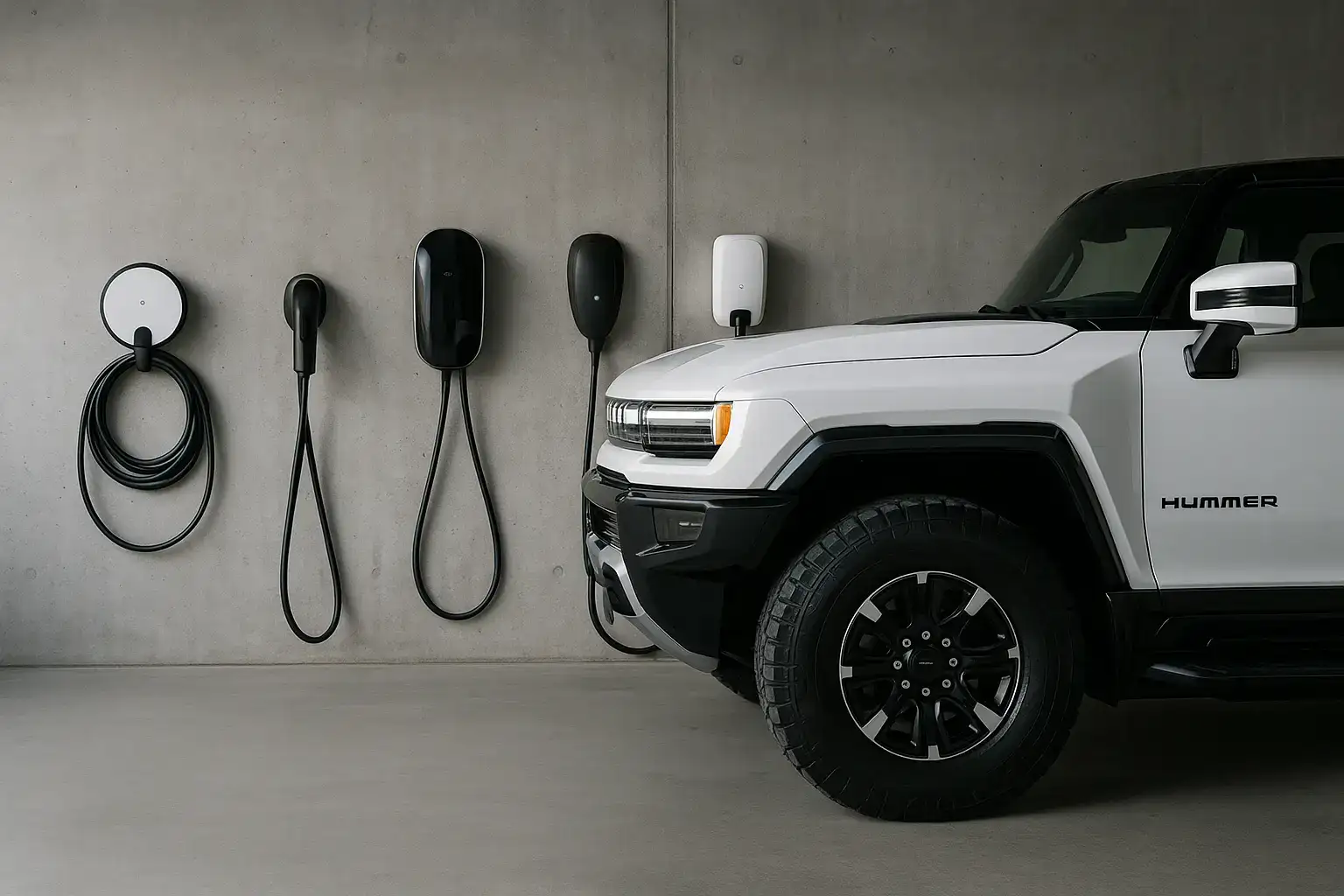
Florida Power and Light serves most of the Treasure Coast and Palm Beach County, and its EV offering is frequently described as a rebate. It is not. FPL EVolution Home is a 10-year agreement, and understanding its structure matters before you sign.
There is no upfront cost for the charger or installation. Instead you pay a monthly program charge: $36 per month with full installation, or $27 per month for equipment only. That covers a Level 2 charger rated at 40 amps and 9.6 kW, professional installation, and maintenance, repairs, replacements and software updates across the ten years. You own the charger when the agreement ends.
Electricity for the program charger is billed separately at an EV-specific rate, roughly 7 cents per kWh off-peak and 28 cents on-peak. That off-peak rate is the real benefit, and it is where the overnight charging math comes from. Two conditions are worth knowing: the EV rate applies only to electricity drawn through the program charger, with the rest of your home staying on your normal residential rate, and a home enrolled in EVolution Home cannot also be on a standard Time-of-Use rate.
It is a ten-year commitment with real exit costs. Early termination requires 30 days’ written notice and a fee starting at $1,851 for a full installation or $1,204 for equipment only, decreasing monthly, plus a $50 administrative fee. For a buyer who will keep the vehicle and the house, the arithmetic is often favorable. For a buyer who may move or switch away from EVs within a few years, it is a commitment to price out carefully. Verify current terms directly with FPL, since utility programs change.
Fuel and Maintenance Savings
These are the savings that do not depend on any program. Charging at home on an off-peak EV rate costs substantially less per mile than fueling a comparable gas truck at current Florida pump prices. Over 15,000 miles a year, the gap is meaningful and it compounds across an ownership period.
Maintenance follows the same pattern. An EV has no oil changes, no transmission fluid, no spark plugs, and regenerative braking that extends pad life considerably. Annual service cost on a Sierra EV runs lower than on a gas Sierra 1500, most noticeably in the first several years.
Neither of these replaces $7,500 in year one. Both are real, and both are the honest basis for an EV decision in 2026.
Current Incentive Status at a Glance
| Incentive | Status | Detail |
|---|---|---|
| Federal new EV credit (§30D) | Gone | Not allowed for vehicles acquired after September 30, 2025 |
| Federal commercial EV credit (§45W) | Gone | Not allowed for vehicles acquired after September 30, 2025; this ends the lease pass-through |
| Federal used EV credit (§25E) | Gone | Not allowed for vehicles acquired after September 30, 2025 |
| Federal charger credit (§30C, Form 8911) | Gone | Not allowed for property placed in service after June 30, 2026 |
| Florida statewide EV rebate | None | Florida has no statewide EV purchase incentive |
| FPL EVolution Home | Available | 10-year agreement, $27–$36/month, includes charger and install, EV rate about 7¢/kWh off-peak |
| Manufacturer and dealer incentives | Varies | Not tax credits; ask for the current program on the specific vehicle |
Does a GMC EV Still Make Financial Sense?
Honestly, the case is harder than it was two years ago, and pretending otherwise would not serve you well. Removing the credit added $7,500 to the effective cost of every retail EV purchase relative to a 2024 transaction. For a buyer who was marginal on the EV proposition at the old pricing, that shift may push break-even past their ownership horizon.
What has not changed is the vehicle or its sticker price. The credit was always a separate benefit layered on top; its removal did not raise MSRP. So the question is cleaner than it used to be: is this truck worth what it costs, on its own merits, with the operating-cost advantage factored in? For some buyers the answer is yes. For others it is now no, and that is a legitimate answer we would rather give you than talk you past.
The buyers for whom the math still works best share a profile. They drive enough annual miles for the per-mile fuel advantage to accumulate. They can charge at home overnight. They are keeping the vehicle long enough for operating savings to matter, rather than trading in three years. If you do not fit that profile, a gas Sierra is probably the better financial decision and we will tell you so.
Which GMC EVs to Look At
Two electric vehicles are available through Starling Buick GMC Stuart, and they serve very different buyers.
Sierra EV
The Sierra EV is the practical choice. For 2026 the lineup runs Elevation, AT4 and Denali, with the AT4 and Elevation trims added to broaden the range below the Denali. Battery availability differs by trim: Elevation offers Standard or Extended Range, AT4 offers Extended or Max Range, and Denali offers all three.
On the published figures, the Extended Range pack is EPA-estimated at up to 410 miles, and the Max Range pack is GM-estimated at up to 478 miles, available on both AT4 and Denali. Confirm the rating for the specific configuration you are considering, since GM has not published an estimate for every trim and battery combination.
| 2026 Sierra EV | Horsepower | Range | MSRP incl. destination |
|---|---|---|---|
| Elevation, Standard Range | — | Confirm configuration | $64,495 |
| Elevation, Extended Range | 645 hp | Up to 410 mi (EPA-est.) | $72,695 |
| Denali, Standard Range | — | Confirm configuration | $71,795 |
| Denali, Extended Range | 645 hp | Confirm configuration | $79,995 |
| AT4, Extended Range | 625 hp | Confirm configuration | $81,395 |
| AT4, Max Range | 725 hp | Up to 478 mi (GM-est.) | $91,695 |
| Denali, Max Range | 760 hp | Up to 478 mi (GM-est.) | $100,695 |
Destination and freight is $2,095 across the lineup. MSRP excludes tax, title, license, dealer fees and optional equipment.
For a Stuart-area buyer commuting, running a local service business or using the truck for weekend recreation, those range figures make the Sierra EV workable as a daily driver, and it supports both Level 2 home charging and DC fast charging. Without the federal credit it is a significant investment, and the per-mile operating advantage over a gas Sierra is the part that pays it back over time.
Hummer EV
The Hummer EV is a different category. It is a performance and design purchase, and the financial case was never built on fuel-savings arithmetic. For a buyer who wants one, the loss of the $7,500 credit represents a smaller share of the transaction than it would on a vehicle half the price. Ask us for current range and pricing on the specific configuration, since both vary by battery and trim.
Talk Through the Numbers at Starling Buick GMC Stuart
If you are weighing a GMC EV without the federal credit, our team can show you the current lease and purchase programs on the Sierra EV and Hummer EV, run a five-year total cost of ownership comparison against an equivalent gas Sierra, and be straight with you about which way the math points for your mileage and charging situation.
The charging question deserves attention before the vehicle question. If you drive locally and can charge at home overnight, range is a non-issue and the operating economics are at their best. If you travel frequently, or your home cannot support a Level 2 installation, the ownership picture changes materially and is worth working through before you commit.
Conclusion
The federal $7,500 EV purchase credit ended for vehicles acquired after September 30, 2025, and the commercial credit that powered the lease workaround ended on the same date. The home charger credit closed for property placed in service after June 30, 2026. Florida has no statewide replacement. What remains is FPL’s EVolution Home program, with its off-peak EV rate and its ten-year commitment, plus the fuel and maintenance advantages that accrue over the life of the vehicle.
That makes the GMC EV decision a straightforward vehicle-versus-vehicle comparison rather than an incentive calculation. For high-mileage drivers who charge at home and keep their vehicles, the Sierra EV still earns its place. For everyone else, a gas Sierra may be the better answer. Come in with your actual mileage and we will work through it with current numbers rather than last year’s assumptions.
Frequently Asked Questions
Did the EV tax credit really end?
Yes. Under Public Law 119-21, enacted July 4, 2025, the Section 30D new clean vehicle credit is not allowed for any vehicle acquired after September 30, 2025. The IRS treats a vehicle as acquired when a written binding contract is signed and a payment is made. Individual consumers buying a new EV today have no access to this credit.
Can I still get the $7,500 by leasing a GMC EV?
No. The lease workaround relied on the Section 45W commercial clean vehicle credit, which terminated on the same date as the consumer credit: it is not allowed for any vehicle acquired after September 30, 2025. With no credit for the lessor to claim, there is nothing to pass through to the lessee. A lease may still be the right structure for you based on money factor and residual value, but not because of a tax credit.
Can my business claim a credit on a GMC EV purchase?
Not under the commercial clean vehicle credit. Section 45W terminated for vehicles acquired after September 30, 2025, which closes the business-purchase route as well as the leasing route. A business vehicle purchase may still involve other tax considerations, including depreciation provisions unrelated to the clean vehicle credits, and that is a conversation for your accountant.
Is the home charger tax credit still available?
No, not for a charger installed now. The Section 30C alternative fuel vehicle refueling property credit, claimed on Form 8911, is not allowed for property placed in service after June 30, 2026. If you installed a qualifying charger in the first half of 2026 and have not yet filed for that tax year, ask your accountant whether you can still claim it.
Does Florida offer any EV incentives?
Florida has no statewide EV purchase rebate or tax credit. Florida Power and Light offers EVolution Home, a 10-year agreement providing a Level 2 charger, installation and maintenance for a monthly charge of $27 to $36, with EV electricity billed at roughly 7 cents per kWh off-peak. It is a program with a long commitment and early termination fees, not a rebate. Verify current terms with FPL directly.
What range does the 2026 GMC Sierra EV get?
Range depends on trim and battery. GM lists the Extended Range pack at an EPA-estimated figure of up to 410 miles and the Max Range pack at a GM-estimated figure of up to 478 miles, with Max Range available on AT4 and Denali. GM has not published an estimate for every trim and battery combination, so confirm the rating for the exact configuration you are considering.
Will the EV tax credit come back?
That depends on future federal legislation and is not something anyone can predict. Clean vehicle credits have been created, modified and repealed by Congress before. We are not in a position to forecast whether or when a credit returns, and we would not recommend timing a purchase around the possibility.
0 comment(s) so far on The $7,500 EV Tax Credit Is Gone — What GMC EV Buyers Can Still Do in 2026